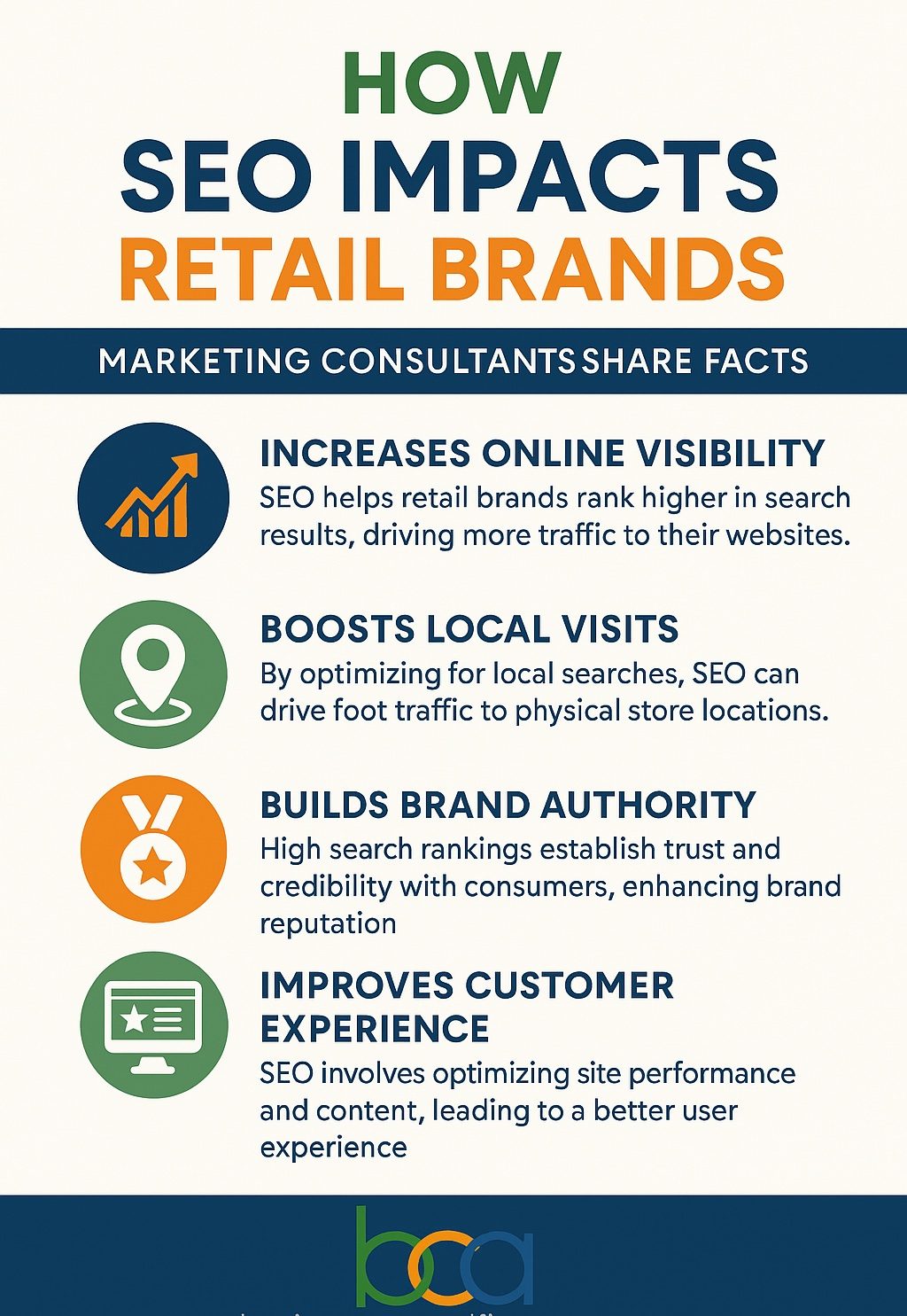
In today’s competitive retail landscape, visibility is everything. Consumers search online before making purchasing decisions, and retail brands that appear at the top of search results have a significant advantage. Search engine optimization (SEO) is the process of improving a website so it ranks higher on search engines like Google. Marketing consultants emphasize that SEO directly impacts both online and in-store sales by increasing brand visibility, driving targeted traffic, and enhancing customer engagement. Without an SEO strategy, retail brands risk losing valuable market share to competitors who invest in digital visibility. Find out more here on how SEO impacts retail brands. Marketing consultants share facts on benefits, impact, best practices for retailers.
The Connection Between SEO and Consumer Behavior
Most retail purchases now begin with an online search. According to industry studies, more than 70% of consumers research products online before buying. SEO ensures that a retail brand’s products and services appear when potential customers are actively searching for them. Furthermore, higher rankings build trust and credibility. Consumers often perceive brands that appear in the top results as more reputable, which increases the likelihood of a purchase. This behavior is consistent across industries, making SEO essential for retail brands of every size.
Increasing Online Store Traffic and Sales
An effective SEO strategy attracts visitors who are already interested in a retail brand’s products. Unlike paid advertising, which stops generating traffic when the budget runs out, SEO delivers long-term results. Marketing consultants often highlight that organic traffic converts at a higher rate because these customers are actively seeking solutions. For e-commerce retailers, optimized product pages, category descriptions, and blog content help drive targeted traffic directly to buying pages, increasing sales without continually increasing ad spend.
Improving Local Search Visibility for Physical Stores
Retail brands with physical locations also benefit significantly from SEO. Local SEO focuses on optimizing a business for searches within a specific geographic area. By claiming and optimizing a Google Business Profile, adding location-based keywords, and encouraging customer reviews, retail brands can increase foot traffic. For example, when a potential customer searches for “clothing store near me” or “best shoe store in Los Angeles,” local SEO efforts ensure the brand appears in those results. This connection between online search visibility and in-person visits has become a critical driver of revenue for brick-and-mortar retailers.
Leveraging SEO to Build Brand Authority
Ranking well in search engines requires valuable, relevant content. By publishing articles, guides, product reviews, and how-to posts, retail brands establish themselves as industry experts. Marketing consultants note that this not only boosts SEO rankings but also builds brand authority. As a brand becomes recognized as a trusted resource, customers return for advice and products. Authority also contributes to customer loyalty, which is critical in a competitive retail environment.
Enhancing the Customer Experience Through SEO
SEO is not just about keywords; it also improves the overall user experience. Search engines prioritize websites that load quickly, are mobile-friendly, and provide easy navigation. When retail brands optimize for these factors, customers enjoy smoother shopping experiences, whether they’re browsing on a desktop or mobile device. A positive experience increases the likelihood of repeat purchases and referrals. Additionally, SEO-driven website improvements reduce bounce rates, keeping customers engaged with the brand longer.
Tracking and Measuring SEO Results
One of SEO’s advantages is the ability to track measurable results. Retail brands can monitor rankings, organic traffic, and conversion rates using analytics tools. Marketing consultants often review these metrics to refine strategies over time. Tracking allows businesses to see which products, keywords, and content generate the most revenue. By continuously analyzing performance, retail brands can adjust their SEO tactics for maximum impact, ensuring sustained growth.
The Long-Term ROI of SEO for Retail Brands
While SEO requires an upfront investment of time and resources, the long-term return on investment (ROI) can be substantial. Once a retail brand secures top rankings for competitive keywords, the resulting traffic continues without ongoing advertising costs. Marketing consultants explain that the cost per lead from organic search is typically lower than paid ads, making SEO one of the most cost-effective marketing strategies for retail brands. Over time, the consistent influx of qualified leads significantly boosts revenue and profitability.
Integrating SEO with Other Marketing Channels
SEO works best when integrated with other marketing efforts. Retail brands that combine SEO with content marketing, social media, and email campaigns create a stronger overall presence. For instance, blog content optimized for search can be shared on social media, driving additional traffic while improving rankings. Email campaigns can promote SEO-driven blog posts, increasing engagement and authority. This multi-channel approach creates a consistent brand message across all platforms.
Overcoming Common SEO Challenges in Retail
Despite its benefits, SEO for retail brands presents unique challenges. High competition, frequent changes in search algorithms, and seasonal demand shifts can make rankings unstable. Marketing consultants recommend regular website audits, competitor analysis, and content updates to maintain strong performance. Additionally, avoiding outdated SEO tactics—such as keyword stuffing or low-quality backlinks—ensures that the brand remains in compliance with search engine guidelines.
Future Trends in SEO for Retail
As technology advances, SEO strategies for retail will continue to evolve. Voice search optimization is becoming increasingly important as more consumers use smart speakers and mobile voice assistants to shop. Artificial intelligence (AI) and machine learning are influencing how search engines rank websites, emphasizing user intent and content relevance. Retail brands that adapt early to these trends will maintain a competitive edge and secure long-term visibility.
Why Working with Marketing Consultants Maximizes Results
While some retail brands attempt DIY SEO, marketing consultants bring specialized skills and industry experience that accelerate results. They understand search engine algorithms, keyword research, and content optimization at a deep level. Consultants also keep up with trends and adjust strategies before competitors do. By partnering with SEO experts, retail brands can avoid costly mistakes, save time, and achieve growth faster.
Find out more here on how SEO impacts retail brands. Marketing consultants share facts on benefits, impact, best practices for retailers. For more help, work with marketing consultants.