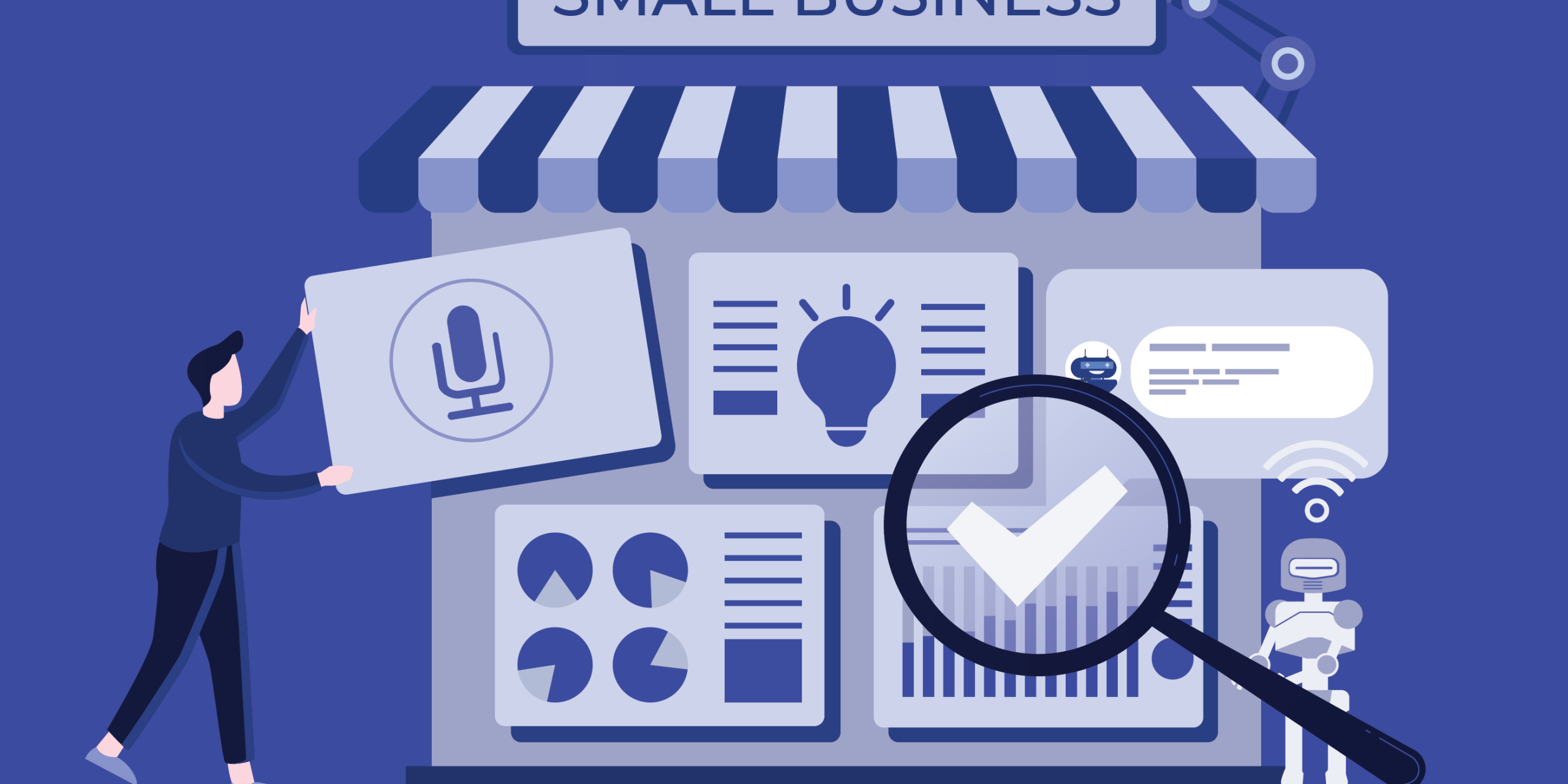
The future of small business depends increasingly on structured artificial intelligence adoption. Because competitive pressure intensifies across nearly every industry, efficiency and precision now determine survival. Therefore, businesses that delay AI integration risk falling behind more agile competitors. When automation aligns with disciplined consulting and measurable strategy, small companies operate with clarity, speed, and sustainable profitability.
Although small business owners historically relied on manual systems and intuition, today’s marketplace demands data-driven execution. In regions such as Los Angeles, rising acquisition costs and operational expenses compress margins. Consequently, the future of small business requires intelligent systems that enhance productivity while controlling costs. Business Consulting Agency provides Artificial Intelligence Consulting, Small Business Consulting, Marketing Consulting, and Business Startup Consulting services designed to help owners adopt AI strategically. When structured implementation replaces experimentation, long-term growth strengthens.
Rising Competitive Pressure
Competition continues expanding due to digital accessibility. Therefore, the future of small business includes competing not only locally but also nationally and globally. When larger organizations leverage automation, smaller firms must respond intelligently.
Moreover, consumer expectations increase simultaneously. Customers expect rapid responses and personalized service. As demand intensifies, manual operations become insufficient. Consequently, AI adoption becomes a strategic necessity rather than an optional upgrade.
Competitive adaptation improves sustainability by:
-
Increasing operational speed
-
Supporting personalized experiences
-
Enhancing strategic positioning
Agility strengthens competitiveness.
Increasing Operational Efficiency
Time remains one of the most limited resources for small business owners. Therefore, the future of small business relies on automating repetitive administrative processes. Scheduling, invoicing, reporting, and data entry can operate efficiently through AI-driven platforms.
Additionally, workflow automation reduces human error. As reliability improves, service consistency strengthens. Consequently, operational efficiency enhances profitability without expanding payroll.
Efficiency improvements strengthen performance by:
-
Reducing administrative strain
-
Supporting lean staffing models
-
Increasing workflow accuracy
Automation protects margins.
Data-Driven Marketing Systems
Marketing costs continue rising, especially in competitive metropolitan markets. Therefore, the future of small business requires AI-enhanced targeting and performance tracking. When campaigns rely on behavioral data rather than broad assumptions, ROI improves.
Moreover, automated bid management systems refine advertising allocation continuously. As performance insights accumulate, acquisition costs decline. Consequently, AI-powered marketing increases measurable returns.
AI marketing systems improve results by:
-
Enhancing audience precision
-
Reducing ad waste
-
Increasing conversion efficiency
Precision improves profitability.
Improving Customer Personalization
Customer experience drives retention and lifetime value. Therefore, the future of small business includes implementing AI tools that personalize communication and product recommendations. When interactions reflect customer preferences, engagement strengthens.
Additionally, predictive analytics anticipate purchasing behavior. As relevance increases, loyalty improves. Consequently, personalized systems enhance revenue stability.
Personalization strengthens sustainability by:
-
Increasing repeat business
-
Supporting higher engagement
-
Enhancing brand perception
Relevance builds loyalty.
Enhancing Financial Forecasting
Financial volatility challenges small enterprises. Therefore, the future of small business depends on predictive financial modeling tools. AI-driven forecasting analyzes trends and projects revenue fluctuations accurately.
Moreover, automated dashboards provide real-time performance metrics. As financial visibility improves, leadership confidence strengthens. Consequently, AI enhances disciplined planning.
Forecasting improvements increase resilience by:
-
Supporting accurate budgeting
-
Reducing revenue uncertainty
-
Enhancing strategic decision-making
Visibility strengthens control.
Competing With Enterprise-Level Capabilities
Large corporations possess substantial resources; however, AI reduces that gap. Therefore, the future of small business includes leveraging enterprise-grade analytical tools at accessible costs. When smaller firms adopt scalable AI solutions, strategic depth increases.
Additionally, automation enables lean teams to perform complex tasks efficiently. As leverage strengthens, competitiveness improves. Consequently, AI levels the competitive playing field.
Enterprise-level capability enhances growth by:
-
Increasing analytical power
-
Supporting operational scalability
-
Enhancing strategic agility
Leverage expands opportunity.
Supporting Lean Scalability
Scalability without proportional cost increases defines sustainable growth. Therefore, the future of small business requires automation frameworks that expand output without expanding payroll equally. AI-powered CRM systems and marketing automation tools enable this transition.
Moreover, predictive analytics identify expansion opportunities early. As insights guide scaling decisions, risk declines. Consequently, AI adoption supports measured and sustainable growth.
Scalable systems improve profitability by:
-
Supporting expansion
-
Maintaining lean cost structures
-
Increasing revenue predictability
Systems strengthen expansion.
Reducing Burnout and Leadership Overload
Small business ownership often results in burnout. Therefore, the future of small business must include AI systems that reduce decision fatigue. Automated reporting and intelligent dashboards provide clarity quickly.
Additionally, structured workflow automation reduces repetitive management tasks. As cognitive strain decreases, strategic focus improves. Consequently, AI enhances leadership performance.
Burnout reduction improves sustainability by:
-
Supporting informed decision-making
-
Decreasing operational stress
-
Enhancing productivity
Clarity strengthens leadership.
Aligning AI With Strategic Consulting
Technology alone cannot replace strategic planning. Therefore, the future of small business depends on aligning automation with disciplined consulting frameworks. Artificial Intelligence Consulting ensures systems integrate with measurable objectives.
Moreover, Small Business Consulting provides clarity regarding implementation priorities. As alignment improves, ROI strengthens. Consequently, structured guidance maximizes AI impact.
Strategic alignment improves outcomes by:
-
Preventing disconnected systems
-
Supporting measurable KPIs
-
Enhancing accountability
Guidance ensures effectiveness.
Preparing for Ongoing Technological Evolution
Technology continues evolving rapidly. Therefore, the future of small business requires adaptability and continuous learning. Businesses that remain open to structured AI integration remain competitive.
Additionally, disciplined evaluation prevents unnecessary adoption. As clarity strengthens, innovation aligns with business goals. Consequently, responsible AI adoption supports long-term sustainability.
Adaptability strengthens resilience by:
-
Supporting continuous improvement
-
Enhancing market responsiveness
-
Increasing strategic foresight
Flexibility preserves advantage.
Long-Term Implications for Small Business
Short-term resistance to change may provide temporary comfort; however, long-term sustainability demands evolution. Therefore, the future of small business will increasingly favor companies that adopt AI responsibly and strategically.
Moreover, structured adoption strengthens profitability and operational clarity. As automation integrates with strategic planning, volatility decreases. Consequently, intelligent systems transform small enterprises into resilient competitors.
Sustainable AI adoption delivers:
-
Predictable operational efficiency
-
Reduced marketing volatility
-
Stronger competitive positioning
Systems outperform stagnation.
Q&A: The Future of Small Business and AI
| Question | Answer |
|---|---|
| Is AI only for large corporations? | No, scalable solutions make AI accessible to small businesses. |
| Does AI replace human leadership? | No, AI enhances decision-making but requires strategic oversight. |
| How soon should small businesses adopt AI? | As early as possible to remain competitive and efficient. |
The Future of Small Business: Why AI Adoption Is No Longer Optional
The future of small business depends on intelligent automation, data-driven marketing, and disciplined operational systems. When Artificial Intelligence Consulting aligns with Small Business Consulting and Marketing Consulting frameworks, companies reduce volatility while increasing profitability. Strategic AI adoption transforms uncertainty into measurable growth advantage.
Partner With Business Consulting Agency
Business Consulting Agency provides Artificial Intelligence Consulting, Small Business Consulting, Marketing Consulting, and Business Startup Consulting services designed to help companies integrate AI strategically. Our team builds structured growth systems that align automation with measurable performance objectives. Contact Business Consulting Agency to prepare your business for the future of AI-driven competition.