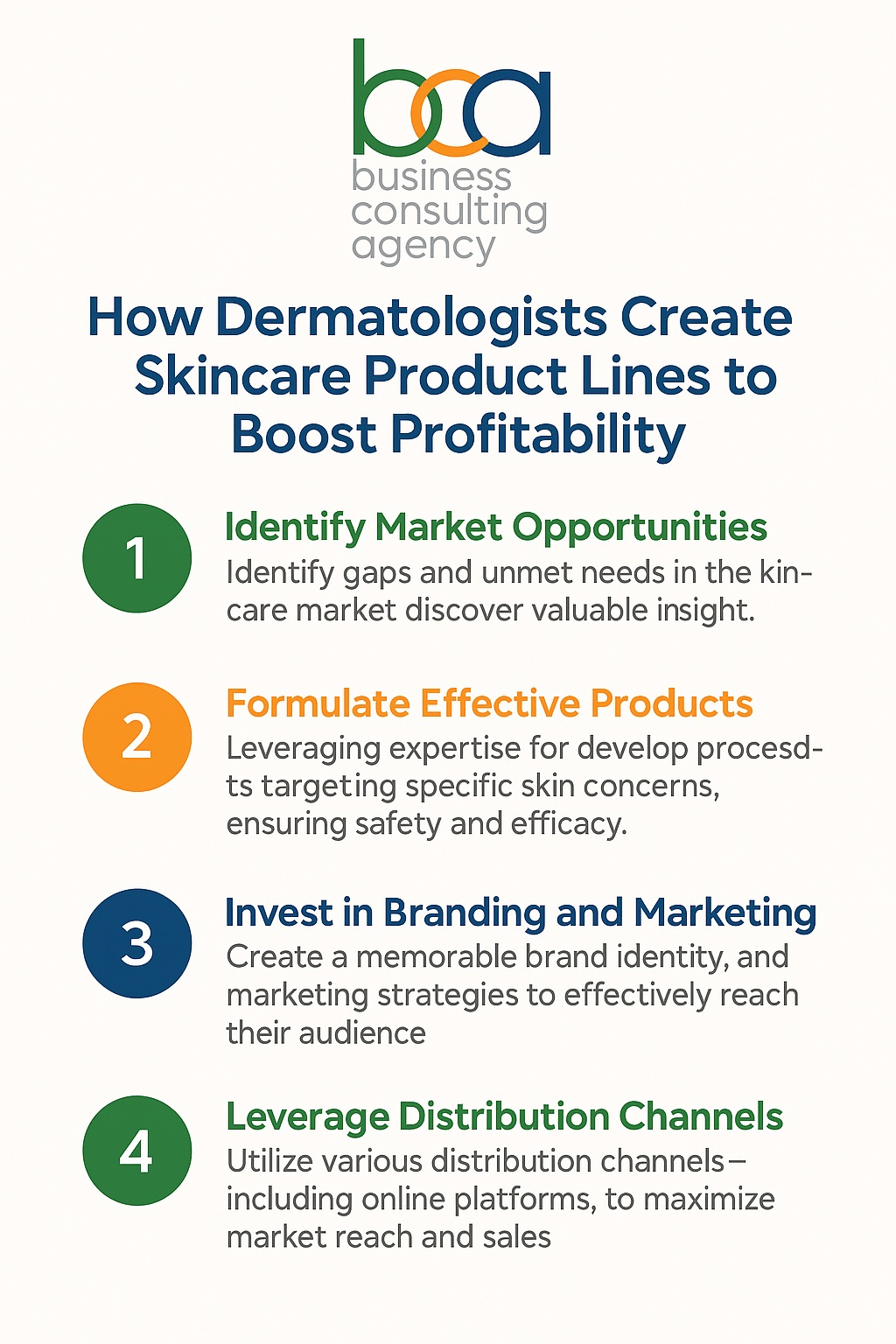

Dermatologists already operate in a profitable sector. However, many are now creating private-label skincare lines to boost income further. This strategy not only builds authority but also provides recurring revenue and brand equity. Find out here more about how Dermatologists create skincare product lines to boost profitability and scalability. Work with business consultants through business consulting services to get started and for best results.
By leveraging medical expertise, dermatologists develop products that consumers trust. Rather than promoting third-party brands, they create and sell their own formulas. These lines can be marketed through clinics, e-commerce platforms, and even wholesale partnerships.
Launching a skincare product line is a strategic move. Done right, it enhances profitability, improves patient loyalty, and opens new revenue streams. In 2025, this opportunity is more accessible than ever.
Let’s explore how dermatologists are creating skincare product lines to increase profitability step by step.
Identifying a Clear Niche and Purpose
Before developing any product, dermatologists must define their target audience. Are they creating products for acne-prone teens, aging skin, or sensitive skin types? A clear niche guides formulation, branding, and marketing.
Additionally, they must ask what problem the product will solve. Products that target specific concerns—like rosacea, hyperpigmentation, or post-treatment recovery—usually sell best.
Defining purpose upfront makes the entire process more focused and profitable. It prevents costly product missteps and builds customer trust faster.
Researching Formulas That Align With Clinical Values
Unlike influencers or beauty brands, dermatologists must prioritize science and results. Therefore, their formulations must reflect clinical accuracy.
Most dermatologists work with formulation labs to create products that meet regulatory standards. These labs help translate ideas into shelf-stable, safe, and effective products.
Throughout development, dermatologists often review ingredient combinations and concentrations. They ensure every product delivers therapeutic benefits and not just cosmetic appeal.
Furthermore, they avoid harmful or controversial ingredients. As a result, patients feel more confident purchasing from a medical professional rather than a retail chain.
Choosing the Right Product Categories
To maximize profitability, dermatologists must choose product categories that align with patient needs and market demand. Although cleansers and moisturizers are standard, specialty products usually drive higher margins.
These include:
-
Vitamin C serums
-
Peptides and retinoids
-
Sunscreens with medical-grade protection
-
Spot treatments for acne or pigmentation
-
Post-procedure calming creams
Because these products are typically recommended during consultations, they offer built-in sales channels. Dermatologists can explain usage while performing in-office treatments or facials.
Moreover, the average patient is more likely to purchase professional-grade solutions after a doctor’s recommendation.
Branding the Product Line With Intention
A skincare line is not just about performance—it’s also about perception. Branding influences how the product is received by both patients and the broader market.
Dermatologists work with branding agencies or consultants to develop a name, logo, and design language. The goal is to reflect professionalism, clinical authority, and care.
Packaging should match the brand identity. For instance, minimalist, clean aesthetics often perform well in the clinical skincare market. Labels must be easy to read, with clear instructions and benefits.
Additionally, dermatologists must decide whether to co-brand with their clinic or create a standalone brand. Each option has pros and cons depending on future expansion goals.
Partnering With Reliable Labs and Manufacturers
Not all skincare labs are equal. Partnering with the right manufacturer ensures product quality, consistency, and scalability.
Dermatologists should choose FDA-registered labs with proven track records in medical-grade skincare. These labs provide services including R&D, formulation, testing, packaging, and labeling.
Some labs offer turnkey services, while others are more collaborative. Either way, maintaining high standards is essential for medical professionals. This protects brand reputation and ensures long-term profitability.
In addition, dermatologists must consider production minimums. Starting with smaller batches allows for testing without excessive investment.
Ensuring Regulatory Compliance
Since dermatologists are medical professionals, product claims must align with FDA and FTC guidelines. Misleading statements or unverified claims can damage credibility and lead to penalties.
Consulting with regulatory experts during development is wise. They assist with proper labeling, compliant marketing language, and product registration if needed.
Staying compliant builds consumer trust and protects the dermatologist’s license and business. Because patients expect honesty from doctors, compliance becomes a competitive advantage.
Launching Through Existing Channels
One major benefit dermatologists have is built-in distribution. Unlike new brands, they already have traffic—both online and offline.
Skincare products can be offered in-office at the point of care. After a treatment, patients can be shown relevant items that enhance or extend results. Because they trust the provider, conversion rates are usually high.
Additionally, dermatologists often have websites and email lists. These tools allow them to promote products directly to existing patients. They may also use educational content like blogs or webinars to introduce new products.
Leveraging these assets reduces marketing costs and boosts early-stage profitability.
Creating E-Commerce for Scalable Sales
To expand reach, dermatologists can build e-commerce platforms. This allows them to sell products nationally or even globally. Because the skincare market is online-heavy, this move increases scale without needing new locations.
Setting up an e-commerce site is simpler than ever. Many dermatologists use platforms like Shopify or WooCommerce. They connect their site to fulfillment centers, enabling smooth delivery with minimal overhead.
To drive traffic, they may use organic SEO, social media, or influencer partnerships. Because the brand already has medical authority, it often stands out online more easily.
This dual-channel approach—offline and online—maximizes both exposure and revenue.
Offering Subscription Models for Recurring Revenue
Recurring revenue is essential for stable profitability. Dermatologists can offer subscription plans that automatically ship products every month or quarter.
This ensures consistent product usage and builds habit loyalty. Patients no longer run out or forget to reorder. Instead, they get convenient deliveries and added value.
Subscriptions work well for everyday items like cleansers, serums, and moisturizers. To increase adoption, dermatologists may offer discounts or free shipping for subscribers.
Building this model early helps generate predictable cash flow and improves retention rates over time.
Gathering Feedback and Improving Products
Once the line launches, collecting feedback is vital. This helps improve existing products and identify new opportunities. Dermatologists can ask for reviews, conduct patient surveys, or observe purchasing patterns.
Patient feedback is often more valuable than lab testing. It reveals how products perform in real-world conditions. For example, if a serum feels sticky, it might not sell well—even if it’s effective.
Based on feedback, dermatologists may adjust formulas, rename items, or expand into new categories. Iteration strengthens the brand and deepens customer trust.
Exploring Wholesale or Retail Partnerships
After building success locally, dermatologists may explore selling their products wholesale. This could include spas, med spas, other dermatology clinics, or boutique retailers.
Wholesaling requires consistent inventory, good margins, and professional branding. However, it can dramatically increase exposure and sales volume.
Some dermatologists also partner with national retailers. Although this requires larger production and higher risk, the potential rewards are significant.
Wholesale expansion works best after proving local demand and refining brand positioning. It can become a key growth channel that boosts overall profitability.
Maximizing Patient Lifetime Value
Ultimately, selling skincare increases the lifetime value of each patient. When patients buy products regularly, they spend more over time. This reduces the need for constant new patient acquisition.
It also deepens the patient-provider relationship. Rather than just visiting for procedures, patients view the dermatologist as their go-to skincare expert.
Trust leads to loyalty. Loyalty leads to referrals. And referrals lead to greater profitability across the entire practice. Find out here more about how Dermatologists create skincare product lines to boost profitability and scalability. Work with business consultants through business consulting services to get started and for best results.