
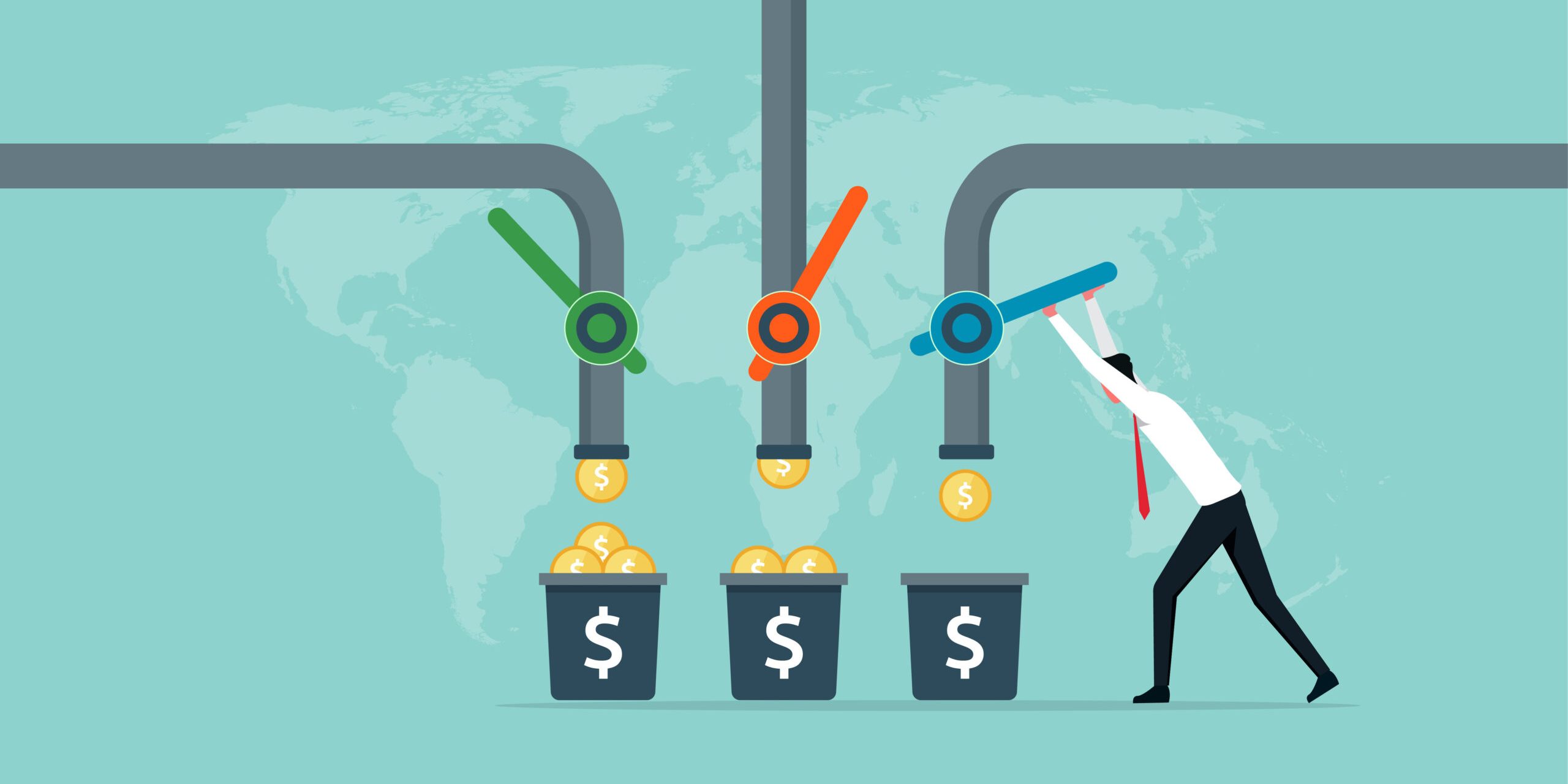
Building predictable revenue is one of the most important objectives for businesses seeking financial stability, sustainable growth, and greater control over their future. Yet many companies continue to operate with inconsistent sales, unpredictable customer demand, and limited visibility into their upcoming revenue. One month may generate strong results while the next falls below expectations, making it difficult to manage cash flow, hire employees, or invest confidently in expansion.
The challenge is rarely solved by simply increasing marketing spending or generating more leads. Revenue predictability depends on the performance of several connected systems, including customer acquisition, sales conversion, pricing, retention, operational capacity, and financial forecasting. When these systems operate independently, businesses often struggle to understand why revenue fluctuates or which improvements will produce the greatest financial benefit.
A company with a strong marketing program may still experience inconsistent revenue because prospects are not contacted promptly. Another business may convert leads effectively but lose customers after their first purchase. Others may generate substantial sales while experiencing cash shortages because customer payments arrive long after operating expenses become due.
Learning how to build predictable revenue requires understanding these relationships and creating repeatable processes that produce measurable outcomes. This guide explains how businesses can develop more reliable revenue models, strengthen sales pipelines, improve customer retention, forecast future income, and implement scalable systems that support long-term profitability.
What Is Predictable Revenue?
Predictable revenue is income that a business can forecast with a reasonable degree of confidence based on measurable customer behavior, established sales processes, historical performance, and recurring commercial activity. It does not mean that revenue remains identical every month or that future sales can be guaranteed. Instead, it means management understands the principal drivers of revenue and can estimate likely outcomes within a defined range.
For example, a consulting company with recurring client agreements, established renewal patterns, and a measurable sales pipeline may be able to estimate its next quarter’s revenue more reliably than a business depending entirely on occasional projects. Similarly, an e-commerce company with repeat customers, stable conversion rates, and well-documented seasonal patterns may develop useful forecasts even without subscription revenue.
Predictability is therefore not limited to subscription businesses. It can be developed through recurring contracts, repeat purchasing behavior, consistent lead generation, structured sales management, and disciplined forecasting. The key is identifying the variables that influence revenue and monitoring them consistently.
Predictable Revenue Versus Recurring Revenue
Although the terms are related, predictable revenue and recurring revenue are not interchangeable. Recurring revenue generally comes from ongoing customer relationships such as subscriptions, memberships, retainers, and service contracts. Predictable revenue is a broader concept that describes how reliably a company can estimate future sales.
A business can have recurring revenue and still experience significant uncertainty if customer cancellations are high or renewals are inconsistent. Conversely, a company selling one-time products may forecast revenue reasonably well if customer demand, repeat purchases, conversion rates, and seasonal patterns are sufficiently stable.
The objective should not be to convert every product or service into a subscription. Businesses should develop revenue models that fit customer needs, purchasing behavior, and the economics of their industry.
1. Understand the Revenue Drivers Behind Your Business
The first step toward predictable revenue is identifying how customers enter the business, what causes them to purchase, how much they spend, and whether they return. Without this information, management may rely on total monthly sales as its primary performance indicator. Revenue totals reveal what happened, but they rarely explain why it happened or whether the results are likely to continue.
Businesses should separate revenue into meaningful categories such as new customers, existing customers, recurring contracts, repeat purchases, and one-time projects. This makes it easier to identify which revenue sources are stable, which are growing, and which create uncertainty. It also helps management distinguish between sustainable growth and temporary increases caused by unusually large transactions.
A useful revenue analysis includes:
- Revenue by product, service, or customer segment.
- New customer revenue versus existing customer revenue.
- Recurring contractual revenue versus one-time sales.
- Average transaction value and purchase frequency.
- Customer retention and cancellation rates.
- Gross margin and contribution margin by revenue stream.
- Sales pipeline value and expected closing dates.
- Customer concentration and seasonal demand patterns.
Consider a professional services company generating $80,000 in monthly revenue. If $55,000 comes from established monthly retainers and $25,000 comes from occasional projects, management should forecast these categories separately. The retainer portion may provide a relatively stable foundation, while project revenue requires closer evaluation of the sales pipeline and historical closing patterns.
This distinction also reveals where the business should concentrate its improvement efforts. Increasing the stability of recurring contracts may produce a different financial benefit from improving the conversion rate of project proposals. Both can strengthen predictability, but they require different operating systems.
2. Build a Consistent and Measurable Lead Generation System
A reliable sales pipeline begins with a consistent flow of qualified prospects. Businesses that depend entirely on occasional referrals, unpredictable advertising campaigns, or individual salespeople often struggle to forecast future opportunities. Even when these channels generate substantial revenue, inconsistent lead volume makes financial planning difficult.
A predictable lead generation system uses documented customer acquisition processes, defined target markets, consistent execution, and measurable performance indicators. The objective is not simply to attract more website visitors or generate larger numbers of inquiries. It is to produce a sufficient volume of qualified opportunities that match the company’s products, services, pricing, and sales capabilities.
Diversify Customer Acquisition Without Fragmenting Resources
Depending on a single acquisition channel creates concentration risk. Search engine rankings can change, advertising costs can increase, referral partners can become inactive, and social media visibility can fluctuate. Businesses should understand these risks and gradually develop complementary acquisition channels.
Potential channels include organic search, educational content, targeted outreach, referral partnerships, paid search, email marketing, and customer referrals. However, diversification should not mean investing equally in every available channel. Companies should prioritize channels with demonstrated customer acquisition potential and expand only when the underlying economics justify additional spending.
For example, a B2B consulting company may generate qualified inquiries through organic search and direct outreach while developing referral partnerships as a third source of opportunities. An e-commerce business may rely more heavily on search visibility, email retention campaigns, and paid customer acquisition. Each business should select its channels according to customer behavior rather than following a generic marketing formula.
Track Lead Quality, Not Just Lead Volume
Lead generation becomes more predictable when businesses measure how prospects progress through the sales process. Management should distinguish between website inquiries, marketing-qualified leads, sales-qualified opportunities, proposals, and completed sales.
A campaign producing 100 inquiries may be less valuable than one producing 25 inquiries if the smaller group contains significantly more qualified buyers. Comparing acquisition channels by qualified opportunities, customer acquisition cost, and realized contribution profit provides a more accurate picture of commercial performance.
Businesses seeking to improve these systems can explore BCA’s Revenue & Lead Generation consulting services, which focus on customer acquisition, conversion optimization, and scalable revenue growth infrastructure.
3. Create a Repeatable Sales Conversion Process
Consistent lead generation does not automatically produce consistent sales. Many companies lose valuable opportunities because inquiries are not assigned promptly, follow-up responsibilities are unclear, proposals are delayed, or prospects receive inconsistent communication. These weaknesses introduce uncertainty into revenue forecasts even when customer demand remains strong.
A repeatable sales process defines how each opportunity moves from initial inquiry to qualification, consultation, proposal, negotiation, and purchase. Every stage should have clear entry criteria, ownership, required activities, and measurable outcomes. This structure allows management to identify bottlenecks and evaluate whether changes are improving performance.
Establish Clear Sales Pipeline Stages
A typical service business might use the following pipeline:
| Sales stage | Primary objective | Measurement |
|---|---|---|
| New inquiry | Capture and assign the opportunity | Response time |
| Qualified lead | Confirm need, fit, and purchasing potential | Qualification rate |
| Discovery consultation | Understand requirements and decision process | Consultation completion rate |
| Proposal | Present a suitable commercial solution | Proposal acceptance rate |
| Negotiation | Resolve outstanding purchasing requirements | Stage progression rate |
| Closed sale | Secure agreement and begin fulfillment | Win rate and deal value |
These stages should reflect the actual buying process rather than an arbitrary CRM template. A business selling low-cost consumer products may need a much simpler funnel, while an organization selling complex enterprise services may require additional stages for procurement, legal review, and implementation planning.
Improve Lead Response and Follow-Up
Response time is one of the operational variables businesses can control directly. If qualified inquiries remain unanswered for extended periods, prospects may lose interest or select competing providers. Businesses should establish response standards, assign ownership, and monitor whether inquiries receive appropriate follow-up.
Automation can support this process by notifying employees, creating CRM tasks, scheduling reminders, and identifying unanswered inquiries. However, automated messages should complement rather than replace thoughtful communication when a prospect requires personalized advice.
The Salesforce guide to sales pipeline management provides additional background on structuring and monitoring sales opportunities.
Identify Revenue Leakage
Revenue leakage occurs when potential or existing revenue is lost through preventable weaknesses in business processes. Common examples include unanswered inquiries, stalled proposals, missed renewals, inconsistent pricing, billing errors, and customers leaving because of inadequate follow-up.
A useful diagnostic approach is to compare conversion rates at each stage of the sales pipeline. If a business consistently generates qualified leads but converts relatively few proposals, the underlying problem may involve pricing, value communication, proposal quality, or the qualification process.
BCA’s related article, How to Find Revenue Leaks in Your Sales Pipeline, provides a more detailed framework for identifying these losses and evaluating their financial impact.
4. Calculate the Sales Activity Required to Meet Revenue Goals
Predictable revenue requires translating financial objectives into measurable operating requirements. Rather than establishing a revenue target and hoping that marketing produces sufficient demand, businesses should work backward from the target to determine the number of customers, opportunities, and qualified leads required.
Consider a consulting company with the following hypothetical assumptions:
| Variable | Monthly assumption |
|---|---|
| New revenue target | $30,000 |
| Average new client contract value | $5,000 |
| Required new clients | 6 |
| Qualified opportunity win rate | 25% |
| Qualified opportunities required | 24 |
| Inquiry-to-qualified-opportunity rate | 40% |
| Total inquiries required | 60 |
Under these assumptions, the company needs approximately 60 inquiries per month to produce 24 qualified opportunities and six new clients. The model is not a guarantee; it is a planning framework based on assumed conversion rates.
The calculation is straightforward:
Required new customers = New revenue target ÷ Average customer contract value
Required qualified opportunities = Required new customers ÷ Win rate
Required inquiries = Required qualified opportunities ÷ Qualification rate
Management should also account for the time between inquiry and purchase. If the average sales cycle lasts 45 days, inquiries generated this month may not produce revenue until a later period. Forecasting should therefore distinguish lead generation activity from expected contract start dates and cash collection.
This framework helps businesses determine whether revenue targets are realistic. If a company currently generates 15 inquiries per month but needs 60, management must decide whether to improve conversion, increase qualified lead volume, raise average contract value, or revise the target.
5. Increase Customer Retention and Repeat Revenue
Acquiring new customers is important, but revenue predictability often improves substantially when existing customers continue purchasing. Retained customers provide a more established source of future demand and reduce the proportion of revenue that must be replaced through new acquisition.
Retention strategies should reflect the business model. A consulting agency may focus on ongoing client relationships, quarterly planning, and measurable service outcomes. An e-commerce company may emphasize product quality, replenishment reminders, and relevant follow-up offers. A professional services firm may develop maintenance agreements or recurring advisory arrangements when those services provide continuing customer value.
Develop Recurring Revenue Where It Makes Commercial Sense
Recurring revenue models can include monthly retainers, maintenance contracts, service subscriptions, memberships, and recurring product deliveries. These arrangements may improve revenue visibility when customers receive ongoing value and contract terms are commercially appropriate.
However, recurring billing alone does not create a sustainable business. Companies must deliver consistent value, maintain service quality, and monitor customer retention. A subscription with high cancellation rates can produce less predictable revenue than a strong repeat-purchase model.
Monitor Customer Churn and Retention
Customer churn measures the proportion of customers lost during a defined period. For a subscription business, a basic monthly customer churn calculation is:
Customer churn rate = Customers lost during the month ÷ Customers at the beginning of the month × 100
If a company begins the month with 100 customers and loses five, its monthly customer churn rate is 5%, excluding the effect of new customer additions.
Businesses should also measure revenue retention because losing one large customer may have a greater financial impact than losing several smaller accounts. Revenue-based measures help management understand whether expansion among existing customers offsets cancellations and contract reductions.
Retention analysis should lead to operational improvements. If customers frequently leave after onboarding, the business may need better expectation setting, training, or implementation support. If cancellations occur near contract renewal dates, account reviews and proactive service planning may be appropriate.
6. Improve Pricing and Customer Lifetime Value
Revenue predictability depends not only on how frequently customers purchase but also on the economic value of those relationships. Businesses that underprice services, discount inconsistently, or fail to understand fulfillment costs may generate substantial sales without creating adequate profitability.
Pricing should reflect customer value, competitive alternatives, service delivery requirements, and financial objectives. Management should review whether existing pricing structures encourage sustainable customer relationships and whether different customer segments generate materially different margins.
Calculate Customer Lifetime Value
Customer lifetime value estimates the economic value generated by a customer over the relationship. The appropriate calculation depends on the business model and the information available.
For a simplified subscription example, assume a customer pays $200 per month, the gross margin is 70%, and the expected relationship lasts 24 months.
Estimated customer lifetime gross profit = Monthly revenue × Gross margin × Expected customer lifetime
The calculation becomes:
$200 × 70% × 24 = $3,360
This is an illustrative gross-profit-based estimate, not net profit or a discounted lifetime value calculation. It excludes customer acquisition costs, some operating expenses, and the time value of money. Nevertheless, it provides a useful starting point for evaluating acquisition spending and retention investments.
Improve Revenue per Customer Responsibly
Businesses can improve customer lifetime value by offering complementary services, improving customer experience, introducing suitable service packages, and developing ongoing relationships. These strategies should respond to actual customer needs rather than encourage unnecessary purchases.
For example, a company providing website development may offer ongoing maintenance, technical support, and conversion optimization services. Customers receive continuing operational value, while the provider develops a more stable revenue base.
7. Build a Reliable Revenue Forecasting Model
Revenue forecasting connects sales activity, existing customer relationships, and expected purchasing behavior into a financial outlook. A useful forecast should distinguish between committed revenue, likely revenue, and uncertain opportunities. Combining these categories without accounting for risk can create unrealistic expectations.
For a service business, management may begin with revenue already contracted for the forecast period. It can then add expected renewals, estimated project revenue, and risk-adjusted opportunities from the sales pipeline.
A simplified forecasting model might include:
| Revenue source | Illustrative forecast |
|---|---|
| Contracted recurring revenue | $50,000 |
| Expected renewals | $12,000 |
| Risk-adjusted new sales | $18,000 |
| Expected one-time projects | $10,000 |
| Total forecast revenue | $90,000 |
These figures are hypothetical. The categories must be mutually exclusive to prevent double counting. For example, a renewal already included in contracted recurring revenue should not be added again as expected renewal revenue.
Use Historical Conversion Rates Carefully
Sales pipeline forecasts often apply estimated closing probabilities to opportunities. If a company has a $20,000 opportunity with an estimated 50% probability of closing, the risk-adjusted pipeline value would be $10,000.
This method can be useful across a portfolio of opportunities, but it does not mean the individual deal will generate $10,000. The actual outcome may be a $20,000 sale or no sale at all. Probability estimates should be based on historical performance wherever possible, and forecast accuracy should be reviewed regularly.
Develop Conservative, Expected, and Optimistic Scenarios
A single forecast can create false confidence, particularly when sales cycles are long or customer demand is volatile. Businesses should develop multiple scenarios reflecting different conversion rates, renewal outcomes, acquisition costs, and sales timing.
A conservative forecast helps management understand the minimum likely financial outcome under weaker conditions. An expected forecast represents the most reasonable planning estimate, while an optimistic scenario illustrates the potential results of stronger performance.
These scenarios support more disciplined decisions about hiring, advertising budgets, capital expenditures, and expansion. Management should avoid committing fixed expenses based solely on optimistic revenue assumptions.
8. Connect Revenue Forecasting With Cash Flow Management
Revenue and cash flow are closely related, but they are not the same. A company may record a sale before receiving payment, while operating expenses must still be paid according to their due dates. Businesses that focus exclusively on revenue forecasts may therefore experience cash shortages even during periods of apparent growth.
A reliable financial planning system should estimate when customers will pay, when operating expenses are due, and how much working capital the business requires. This is particularly important for companies with long payment terms, substantial inventory requirements, or project-based billing.
For example, a consulting company may sign a $30,000 agreement in November but receive payment in installments over several months. Management should forecast the contract revenue according to the applicable accounting treatment while separately projecting actual cash receipts.
A rolling 13-week cash flow forecast can help businesses identify near-term funding requirements and potential shortfalls. Longer-term revenue forecasts support strategic planning, but short-term cash visibility is essential for operational stability.
9. Use CRM Systems and Automation to Improve Revenue Consistency
Customer relationship management systems can provide a central record of inquiries, opportunities, customer interactions, proposals, and follow-up responsibilities. When configured appropriately, a CRM helps businesses identify stalled deals, monitor sales activity, and maintain more consistent communication.
Automation can strengthen these systems by reducing repetitive administrative work and helping employees follow established procedures. Common applications include lead assignment, appointment reminders, follow-up notifications, proposal tracking, renewal alerts, and reporting workflows.
Artificial intelligence can also support revenue operations through conversation summaries, inquiry classification, sales data analysis, and identification of unusual pipeline patterns. However, businesses should first establish reliable processes and accurate data. Automating an inconsistent workflow may increase errors rather than improve performance.
Organizations considering broader modernization can explore BCA’s AI Operations & Infrastructure consulting services for guidance on connected business systems, workflow integration, and operational improvements.
10. Establish a Revenue Performance Dashboard
Predictable revenue requires consistent management attention. Businesses should monitor a limited set of indicators that explain both current results and future sales potential. A dashboard should help management identify changes early enough to respond, rather than merely summarize results after the month has ended.
Useful revenue performance indicators include:
| KPI | What it measures |
|---|---|
| Qualified leads | Volume of commercially relevant opportunities entering the pipeline |
| Lead-to-customer conversion | Effectiveness of customer acquisition and sales |
| Average contract or order value | Revenue generated per transaction |
| Sales cycle length | Time required to convert opportunities |
| Pipeline coverage | Relationship between qualified pipeline value and sales targets |
| Customer retention | Ability to maintain customer relationships |
| Recurring revenue | Revenue supported by ongoing customer agreements |
| Customer acquisition cost | Cost of acquiring new customers |
| Contribution margin | Revenue remaining after relevant variable costs |
| Forecast accuracy | Difference between projected and actual revenue |
Management should establish definitions for each metric and ensure that information is collected consistently. A lead qualified by one employee should meet the same criteria as a lead qualified by another. Otherwise, performance comparisons may be misleading.
Weekly reviews can focus on leading indicators such as qualified inquiries, pipeline movement, response times, and upcoming renewals. Monthly reviews can evaluate revenue, profitability, customer acquisition costs, retention, and forecast accuracy.
The objective is to identify the few variables that have the greatest influence on financial performance and improve them systematically.
11. Reduce Revenue Volatility and Customer Concentration Risk
Even businesses with strong sales processes may experience revenue fluctuations due to seasonality, economic conditions, customer concentration, or changes in demand. Predictability therefore requires identifying risks that could materially affect future income.
Customer concentration is particularly important for service businesses. A company generating a substantial proportion of its revenue from one or two customers may appear stable until a major contract ends. Management should monitor the percentage of revenue associated with its largest accounts and develop contingency plans where appropriate.
Diversifying customer relationships, strengthening renewal processes, improving acquisition consistency, and maintaining appropriate cash reserves can reduce exposure to unexpected changes. However, diversification should be pursued carefully. Entering unfamiliar markets or launching unrelated services may increase complexity without improving financial stability.
A disciplined approach focuses first on strengthening the company’s existing revenue model, then expanding into complementary opportunities supported by demonstrated customer demand.
12. Create a 90-Day Plan to Improve Revenue Predictability
Businesses do not need to redesign every commercial process simultaneously. A focused 90-day improvement program can establish reliable baseline measurements, correct the most important operational weaknesses, and create a foundation for more consistent revenue performance.
Days 1–30: Establish Financial and Sales Visibility
During the first month, management should document revenue by customer segment, product or service, and transaction type. The business should review historical sales performance, customer retention, average contract value, and lead conversion rates.
The company should also examine its existing sales pipeline and identify missing information, delayed follow-up, and inconsistent qualification practices. This creates a baseline for evaluating future improvements.
By the end of this phase, management should have a documented revenue model, a basic sales funnel, and a preliminary forecast.
Days 31–60: Improve the Highest-Impact Revenue Processes
The second month should focus on the operational problems most likely to improve revenue consistency. Depending on the assessment, priorities may include lead response, CRM usage, proposal follow-up, customer retention, or pricing improvements.
Businesses should select a manageable number of initiatives and assign clear responsibilities. Performance should be measured against the baseline established during the first month.
For example, a company experiencing poor proposal conversion may standardize discovery calls, improve proposal quality, and introduce structured follow-up. A business with strong sales but frequent customer cancellations may prioritize onboarding and retention.
Days 61–90: Strengthen Forecasting and Scale Proven Improvements
During the final month, management should evaluate the results of the initial changes and determine which improvements should become permanent operating procedures. The business should refine its revenue forecast using updated conversion rates, customer retention information, and sales cycle data.
Successful processes can then be supported through documentation, employee training, CRM workflows, and appropriate automation. Additional investments should be based on observed improvements rather than assumptions.
At the end of the 90-day period, the business should have greater visibility into its revenue drivers, a more consistent sales process, and a practical framework for ongoing performance management.
Common Mistakes That Prevent Predictable Revenue
One common mistake is treating revenue growth as a marketing problem when the underlying weakness exists elsewhere in the business. Increasing advertising spending may generate additional inquiries, but those opportunities can be wasted if sales follow-up is inconsistent or customer retention is poor. Companies should evaluate the entire revenue process before deciding where to invest.
Another mistake is forecasting future sales based exclusively on recent performance. A strong month may reflect a large one-time transaction, seasonal demand, or an unusual customer purchase. Forecasts should distinguish these events from repeatable commercial activity and account for the timing of future opportunities.
Businesses also undermine predictability when they fail to measure profitability. Revenue growth achieved through excessive discounts, expensive customer acquisition, or inefficient service delivery may create additional operational pressure without improving financial stability.
Finally, organizations should avoid introducing complex software before establishing clear processes. CRM systems, automation platforms, and AI applications can improve execution, but they cannot replace sound commercial strategy, financial discipline, and accountable management.
Frequently Asked Questions About Predictable Revenue
How can a small business build predictable revenue?
A small business can improve revenue predictability by identifying its most reliable customer segments, establishing consistent lead generation, standardizing sales follow-up, improving customer retention, and monitoring conversion rates. Management should also develop realistic revenue and cash flow forecasts. The objective is to create repeatable commercial processes that can be measured and improved over time.
What is the difference between predictable revenue and recurring revenue?
Recurring revenue comes from ongoing arrangements such as subscriptions, memberships, and service contracts. Predictable revenue refers to income that can be forecast with reasonable confidence, regardless of whether it comes from recurring agreements or repeatable one-time sales. Recurring revenue may improve predictability, but customer cancellations and inconsistent renewals can still create uncertainty.
What are the most important KPIs for predictable revenue?
Important indicators include qualified lead volume, sales conversion rate, average transaction value, sales cycle length, customer retention, recurring revenue, customer acquisition cost, and forecast accuracy. Businesses should also monitor contribution margin and cash collection because revenue alone does not establish financial stability. The most useful KPIs are those that directly explain the company’s revenue performance.
How long does it take to build predictable revenue?
The timeline depends on the business model, sales cycle, existing customer base, and operational weaknesses. Some improvements, such as faster lead response or better follow-up procedures, can be implemented relatively quickly. Establishing reliable forecasts and retention patterns may require several months of consistent data collection and process refinement.
Can AI help businesses generate more predictable revenue?
AI can support revenue predictability by assisting with lead classification, customer communication, sales analysis, reporting, and workflow monitoring. These applications may improve consistency when integrated into reliable business processes. However, AI does not guarantee additional revenue, and its financial value should be evaluated using measurable outcomes, implementation costs, and operational risks.
Build More Predictable Revenue With Better Business Systems
Predictable revenue is created through the coordinated performance of customer acquisition, sales conversion, retention, pricing, operations, and financial management. Businesses that understand these relationships can make more informed decisions about marketing investments, staffing, technology, and expansion.
The strongest revenue systems are not necessarily the most complicated. They are the ones that consistently attract suitable customers, convert opportunities efficiently, deliver ongoing value, and provide management with reliable information about future performance.
Business Consulting Agency helps companies strengthen revenue generation, customer acquisition, sales processes, and scalable growth infrastructure. Our consulting approach focuses on identifying operational weaknesses, improving commercial systems, and developing practical strategies that support measurable business performance.
Explore our Revenue & Lead Generation consulting services to learn how BCA can help your business improve revenue consistency, strengthen customer acquisition, and build a more scalable foundation for growth.