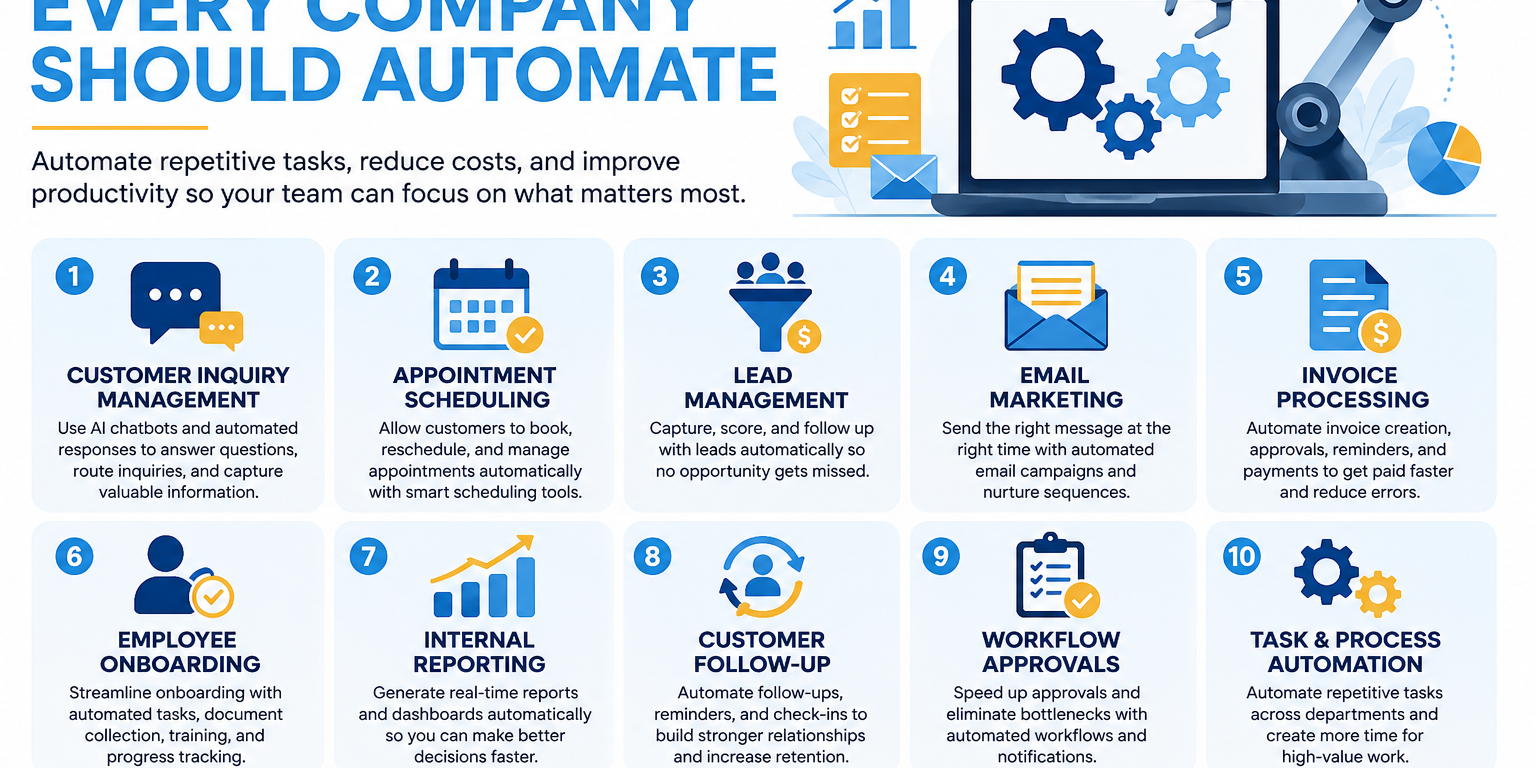
Business process automation has become one of the most effective ways to improve efficiency, reduce costs, and support business growth. Many organizations continue to rely on manual workflows that consume valuable time. However, modern automation tools allow companies to streamline operations and improve productivity. As a result, businesses often accomplish more without increasing overhead expenses.
In the past, automation was primarily associated with large corporations. Today, affordable software platforms have changed that reality. Consequently, businesses of every size can automate routine activities and improve performance. Furthermore, organizations that embrace automation frequently gain a competitive advantage. Therefore, business process automation has become a priority for growth-focused companies.
Why Business Process Automation Matters
Every organization depends on processes to operate successfully. Unfortunately, many of those processes require repetitive manual work. As a result, employees spend valuable time completing tasks that technology can often handle more efficiently.
Business process automation reduces those inefficiencies. Consequently, teams become more productive and focused on higher-value activities. Furthermore, automation improves consistency throughout the organization. Therefore, businesses often experience stronger profitability and scalability.
Key benefits of business process automation include:
• Reduced labor costs
• Increased productivity
• Improved accuracy
• Faster execution
• Better customer experiences
• Greater scalability
These benefits help organizations operate more efficiently while supporting long-term growth.
Automate Customer Inquiry Management
Customer inquiries arrive through multiple channels every day. Meanwhile, employees often struggle to respond consistently. Consequently, opportunities may be missed and customer experiences may suffer.
Fortunately, automation helps solve this challenge. AI-powered systems can answer questions, route inquiries, and collect information automatically. As a result, customers receive faster responses and businesses improve efficiency.
Important customer inquiry automations include:
• AI chatbots
• Website contact forms
• Lead routing systems
• FAQ automation
• Instant response systems
• Appointment request workflows
These systems improve responsiveness while reducing administrative workloads.
Automate Appointment Scheduling
Scheduling appointments manually consumes valuable time. In addition, scheduling errors often create frustration for customers and employees alike. Therefore, appointment scheduling remains one of the most valuable automation opportunities.
Modern scheduling platforms automate booking and coordination processes. Consequently, businesses reduce administrative burdens. Furthermore, customers enjoy a more convenient experience.
Popular scheduling automations include:
• Online booking systems
• Calendar synchronization
• Appointment reminders
• Confirmation emails
• Rescheduling workflows
• Cancellation management
These tools improve efficiency while enhancing customer satisfaction.
Automate Lead Management
Generating leads is important. However, managing those leads effectively is equally important. Unfortunately, many businesses struggle with inconsistent lead follow-up. As a result, valuable opportunities are often lost.
Automation ensures that every lead receives timely attention. Consequently, conversion rates frequently improve. Furthermore, sales teams can focus their efforts on qualified prospects.
Lead management automations include:
• Lead capture forms
• CRM integration
• Lead scoring
• Automated follow-up
• Pipeline tracking
• Sales notifications
These systems help businesses maximize marketing investments.
Automate Email Marketing
Email marketing continues to deliver strong results. Nevertheless, manually managing campaigns requires considerable time and effort. Therefore, many organizations rely on automation to improve efficiency.
Marketing automation platforms help businesses communicate consistently with prospects and customers. As a result, engagement often increases. Furthermore, campaigns become easier to scale.
Important email marketing automations include:
• Welcome sequences
• Lead nurturing campaigns
• Customer onboarding emails
• Promotional campaigns
• Follow-up sequences
• Re-engagement campaigns
These automations strengthen relationships while reducing manual work.
Automate Invoice Processing
Invoice management often involves repetitive administrative tasks. Consequently, accounting teams spend significant time processing paperwork. Fortunately, automation can streamline these activities.
Automated invoice systems improve speed and accuracy. As a result, businesses reduce errors and improve cash flow visibility. Furthermore, accounting teams gain more time for strategic financial activities.
Invoice automation opportunities include:
• Invoice generation
• Payment reminders
• Approval workflows
• Expense tracking
• Receipt management
• Payment processing
These systems improve efficiency while supporting financial control.
Automate Employee Onboarding
Onboarding new employees requires coordination across multiple departments. Meanwhile, manual onboarding often creates delays and inconsistencies. Therefore, onboarding represents another strong automation opportunity.
Automated onboarding workflows help standardize the employee experience. Consequently, new hires become productive more quickly. Furthermore, administrative burdens decrease significantly.
Employee onboarding automations include:
• Welcome emails
• Document collection
• Training assignments
• Task checklists
• Access requests
• Progress tracking
These workflows improve efficiency and consistency throughout the hiring process.
Automate Internal Reporting
Reporting is essential for decision-making. However, creating reports manually often consumes excessive time. Consequently, managers may spend hours gathering information rather than analyzing it.
Fortunately, reporting automation simplifies this process. Automated systems collect and organize data automatically. As a result, leaders receive timely insights and improved visibility.
Reporting automations include:
• Sales reports
• Marketing dashboards
• Financial summaries
• Performance reports
• KPI monitoring
• Operational tracking
These systems support faster and more informed decision-making.
Automate Customer Follow-Up
Customer follow-up directly impacts conversions and retention. However, many businesses fail to maintain consistent communication. Consequently, opportunities are frequently missed.
Automation helps businesses remain connected with prospects and customers. As a result, engagement improves significantly. Furthermore, organizations strengthen relationships while reducing workloads.
Customer follow-up automations include:
• Lead nurturing
• Consultation reminders
• Customer check-ins
• Review requests
• Renewal reminders
• Re-engagement campaigns
These systems improve customer experiences and support revenue growth.
Automate Workflow Approvals
Approval processes often create unnecessary bottlenecks. Meanwhile, employees wait for decisions that delay progress. Therefore, workflow approvals should be automated whenever possible.
Automated approval systems accelerate internal processes. Consequently, projects move forward more efficiently. Furthermore, accountability and visibility improve throughout the organization.
Common approval automations include:
• Purchase requests
• Vendor approvals
• Budget approvals
• Contract reviews
• Project approvals
• Internal requests
These workflows help organizations improve operational efficiency.
Build a Scalable Automation Strategy
Many businesses attempt to automate everything at once. However, a phased approach usually produces better results. Therefore, organizations should begin with high-impact opportunities.
Customer communication, lead management, and scheduling often provide quick wins. As a result, businesses see measurable improvements early. Furthermore, those successes help support additional automation initiatives.
Recommended starting points include:
• Customer inquiries
• Appointment scheduling
• Lead management
• Email marketing
• Reporting
• Customer follow-up
These areas often deliver the strongest return on investment.
Long-Term Benefits of Business Process Automation
Business process automation provides value beyond efficiency improvements. Although many companies begin with cost reduction goals, they often discover additional benefits over time.
As automation expands throughout the organization, productivity improves across multiple departments. Consequently, employees gain more time for strategic work. Furthermore, customer experiences become more consistent. As a result, profitability often increases steadily.
Long-term benefits include:
• Lower operating costs
• Increased productivity
• Faster growth
• Better customer experiences
• Greater scalability
• Improved profitability
• Better decision-making
• Stronger competitiveness
These advantages support sustainable long-term growth.
Key Takeaways
Business process automation helps organizations reduce costs, improve efficiency, and support growth. Furthermore, modern automation tools are more accessible than ever before. Consequently, businesses of every size can benefit from implementing automation strategies.
Core takeaways include:
• Automate repetitive tasks
• Improve customer communication
• Streamline lead management
• Simplify reporting
• Increase productivity
• Build scalable systems
These strategies help businesses become more efficient and profitable.
Q&A
| Question | Answer |
|---|---|
| What is business process automation? | Business process automation uses technology to automate repetitive workflows and business activities. |
| Which processes should businesses automate first? | Customer inquiries, scheduling, lead management, and reporting often provide the fastest results. |
| Does automation reduce operating costs? | Yes. Automation reduces manual workloads and improves efficiency. |
| Can small businesses benefit from automation? | Absolutely. Many automation tools are affordable and designed for smaller organizations. |
| Does automation replace employees? | Most businesses use automation to improve productivity rather than replace staff. |
How Business Consulting Agency Helps Businesses Grow
Business Consulting Agency helps organizations identify automation opportunities, modernize operations, and build scalable business systems. Furthermore, our team works closely with business owners to reduce inefficiencies, improve productivity, and support sustainable growth.
Whether a company needs workflow automation, CRM optimization, marketing automation, customer service improvements, or broader digital transformation initiatives, Business Consulting Agency provides practical solutions designed to deliver measurable results. As a result, organizations become more efficient, more profitable, and better prepared for long-term success.